AI does not differentiate organisations by how advanced it is, but by how deeply it is grounded in their reality.
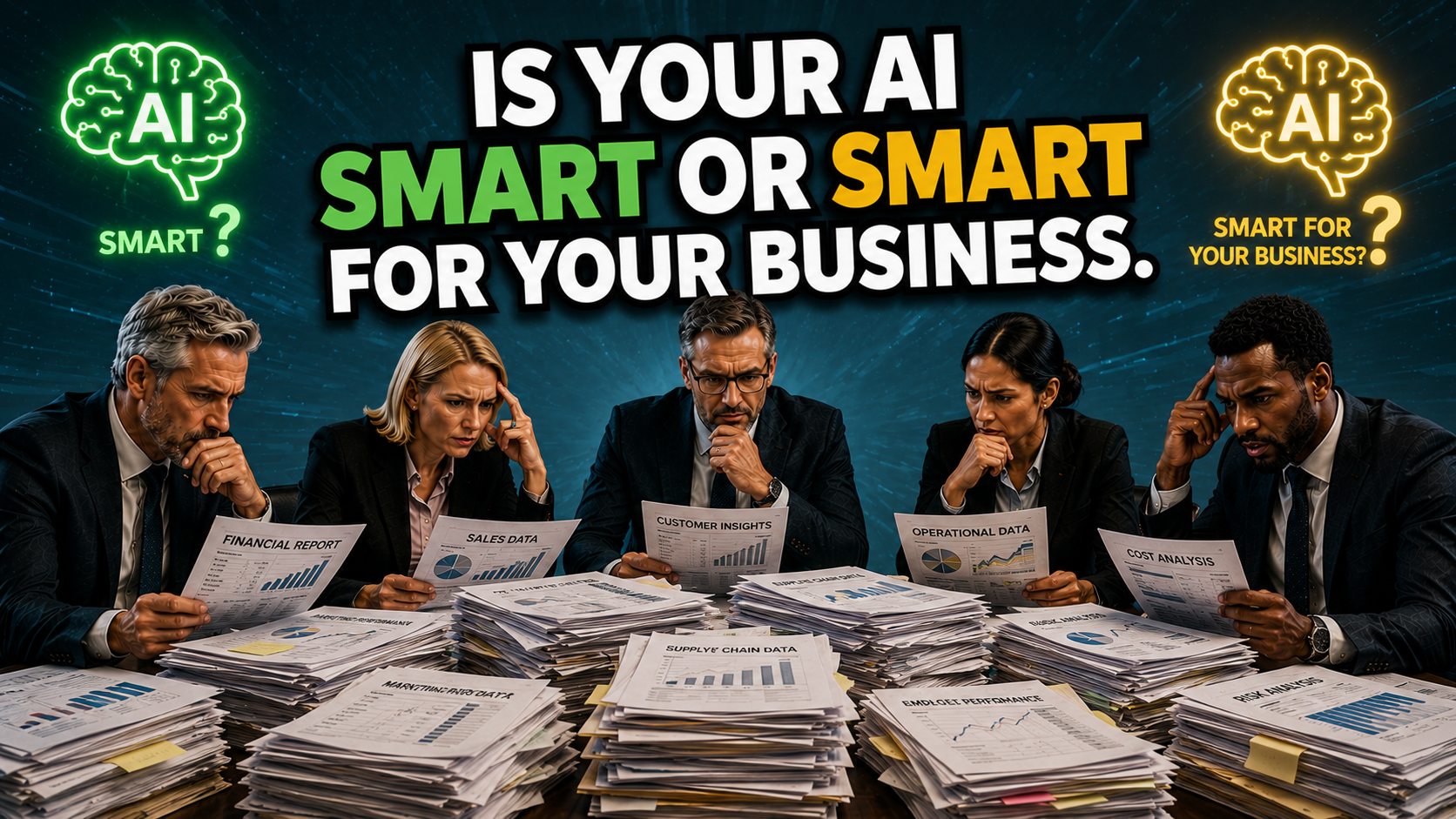

AI is available everywhere today. Everyone has access to the same large language models. Everyone can ask the same prompts. And precisely there, the final and most crucial question arises.
Do we feed AI with our own company data and context,
or do we rely on general intelligence that is the same for everyone?
The difference may seem technical. In reality, it determines whether AI differentiates you or commoditizes you.
AI only becomes valuable when it understands not just language, but the context in which decisions are made.
AI gains real value only when it knows your world. That means:
your products
your customers
your processes
your history
An AI that is fed with your data understands: why this customer is special
which agreements apply here
which mistakes you made in the past
what your organization can truly deliver
Microsoft Copilot works exactly this way. Through retrieval augmented generation, generic intelligence is enriched with your context, drawn from Microsoft 365, Dynamics 365 and other connected sources.
Not guessing.
Not generalizing.
But deciding based on your reality.
General intelligence: impressive, but shallow
If you use AI as is, without business context, you get: strong language capabilities
broad general knowledge
plausible but often generic answers
A standalone ChatGPT knows: how sales processes work in general
what common marketing theory says
what can be found online about your market
But it does not know: what your pricing agreements are
which product variant is still available
which customer is dissatisfied
which compliance rules apply internally
For core processes, that is simply insufficient. And dangerous. Because an AI that does not know the answer will still try to fill in the gaps.
Many early AI experiments were disappointing. Not because AI failed, but because context was missing. Users reacted with: “This is nice, but I already knew this.”
That is precisely the risk of generic AI. It helps with writing, summarizing and brainstorming, but it rarely touches the core of value creation.
To take AI operationally seriously, it must be fed. And that requires conscious investment:
making data accessible
indexing knowledge
connecting systems
Those who do not do this often see rapid adoption, but no lasting impact.
If organizations do not offer a strong internal AI solution based on their own data, employees will find alternatives themselves.
And then the following happens: confidential documents are pasted into public AI tools
customer data is processed externally
intellectual property silently leaks away
Not out of bad intent, but because people want to be productive.
By offering a secure internal Copilot that works with your own data, this risk is reduced significantly. Analysts such as IDC are clear: enterprise AI is not only about value creation, but also about damage prevention.
An AI that understands your data: creates better proposals
provides more accurate answers
earns trust more quickly
Examples include: a sales Copilot that builds proposals based on actual margins
a service Copilot that advises solutions based on historical cases
a finance Copilot that performs analysis using your general ledger
The impact is tangible. Fewer human corrections. Faster decisions. Higher acceptance.
AI stops being something extra and becomes part of the process itself.
Feeding AI with your own data does not mean opening everything everywhere.
It requires: data centralization
clear authorisation models
privacy by design
Microsoft Graph and its security model help here. A Copilot only sees what the user is allowed to see. But this must be designed at the process level:
Which data is relevant
Which data is sensitive
Who has access to what
Without these choices, organizations either miss value or take unnecessary risk.
Copilots and agents are powerful precisely because they incorporate your data.
Examples are already visible: a Teams meeting leads to a transcript which creates an action in Dynamics
CRM data leads to a proposal and a follow up task
SharePoint knowledge leads to a customer response that is compliant
Microsoft is investing heavily in: Semantic Index for Copilot
Copilot Studio knowledge sources
secure data connections without training models on your intellectual property
But the responsibility remains with the organization. AI can only work with the data you make available.
Here, AI directly connects to competitive advantage.
In a world where models become commoditised, it is not the AI that differentiates you, but the data behind it.
Executives must ask themselves: which unique datasets do we possess
which expertise resides in people who may leave
how do we capture that knowledge digitally
Some companies purchase datasets. Others have decades of valuable data but fail to use it.
Be aware that unintentional data loss is real. Every time someone inputs company information into a public AI, a piece of advantage disappears.
This requires explicit policy choices: which AI tools may be used
where data is processed
what is explicitly prohibited
A generic AI is like a brilliant graduate fresh out of university.
Smart.
Fast.
Broad.
But without knowledge of your products, your customers and your history, the contribution remains limited.
Feed that same person with real business context, and you get a top performer.
AI works exactly the same way.
This final choice brings everything together.
Are your processes in order
Is your data reliable
Is your governance mature
If so, AI powered by your own data becomes a multiplier.
If not, AI remains a smart assistant without memory.
Organizations that invest now in AI combined with their own context build something that is difficult to catch up with: digital collective knowledge, corporate memory, an AI that becomes smarter than that of competitors.
Generic AI is for everyone.
Contextual AI is yours.
And that is where the difference is made.

 Building responsibly or pushing ahead quickly